
Indian Basmati
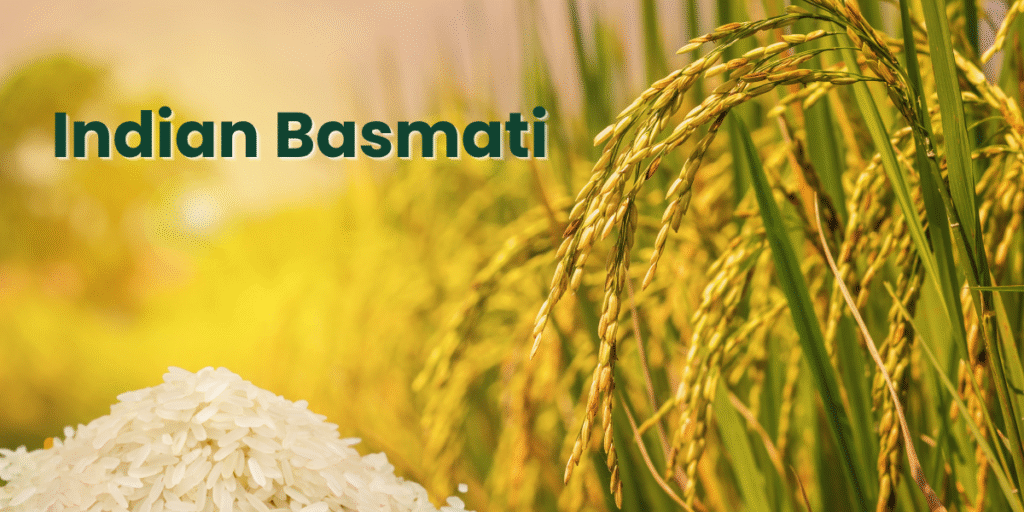
Indian Basmati—A Billion-Dollar Industry: Trends & Forecast for 2025–2034
From the fertile plains of the Himalayan foothills to the luxurious dining tables of Dubai, London, and New York, Indian basmati rice has traveled far—carrying with it a fragrance that speaks of heritage, purity, and craftsmanship. In fact, it is a part of India’s culture, a symbol that shows the world the country’s farming skills and traditions. In 2025, the value of the global basmati rice market is around USD 13.1 billion. Experts believe it can reach USD 37.5 billion by 2034, which is a very big jump. The growth rate is about 12.4% every year. These numbers are not just business figures—they show changing tastes of people, new farming technology, and India’s strong position in making the most loved aromatic rice in the world.
Why Indian Basmati Is the King of Rice
Indian basmati rice is not something that grows in a hurry. It comes from many years of traditional farming knowledge passed from one generation to another. Most of it grows in Haryana, Punjab, Himachal Pradesh, Uttarakhand, Uttar Pradesh, Jammu & Kashmir, and Delhi. The soil there has the right minerals, and the weather is perfect for giving the rice its famous smell and long grains.
What makes it different from other rice?
- Aroma: Many people say the smell is nutty and floral. When cooked, the fragrance becomes stronger and very tempting.
- Texture: After cooking, each grain stays separate, soft, and fluffy, not sticky.
- Nutrition: It has a lower glycemic index compared to many other rice types, so health-conscious people prefer it.
Market Picture in 2025
According to APEDA data, three countries buy more than half of India’s basmati exports: Iran (25.3%), Saudi Arabia (17.1%), and Iraq (12.3%). After them come the UAE (6.5%) and Yemen (5.2%).
Outside the Middle East, demand is also growing in:
United States (4.1%) – Because of ethnic communities and fine dining restaurants.
United Kingdom (3.3%) – Loved in retail shops and hotels/restaurants.
North Africa—India has only a 6% share here, meaning there is still big space to grow.
Trends for 2025–2034
1- More Health-Aware Customers
People are now more careful about diabetes and obesity, so low-GI basmati rice is getting more popular. Organic and brown basmati types are seeing fast growth, especially in Europe and North America.
2- Technology in Farming
Farmers are using drones, satellite images, and seeds that can resist diseases. This modern farming increases the harvest and saves water, which is very important because of climate changes.
3- Ready-to-Cook Rice Demand
Busy city life means people want food that is quick to prepare. Instant and pre-cooked basmati rice is in high demand. The ready-to-eat rice market is growing by more than 8% each year, and basmati is leading in the premium section.
4- Sustainability as a Priority
Buyers, especially in Europe, want rice that is grown in a way that is good for the environment. They are ready to pay more for rice that has sustainability certificates.
Challenges That We are Facing
Even though India leads the basmati rice world, there are some challenges:
- Price Changes: Global trade issues and changing harvest amounts can affect prices.
- Climate Risks: Irregular monsoons can harm quality and quantity.
- Competition: Pakistan is still strong in the Middle East market.
Looking into the Future
From 2025 to 2034, basmati exports are expected to triple in value. This growth will be supported by:
- More demand in the Middle East for high-quality rice.
- Increase in organic-certified basmati for Europe.
- Rising love for ethnic food in North America and Asia-Pacific.
If India gains just 10% more share in markets like North Africa and East Asia, it can add USD 3–4 billion to its income by 2030.
IAGS and Its Role in This Story
In this fast-changing global market, IAGS has made a strong name as a trusted supplier of premium basmati rice. Located in Karnal, Haryana—the heart of basmati production—this company mixes old farming wisdom with modern milling machines to create rice that passes the world’s highest quality checks.
Why IAGS is ahead of others:
- Three milling plants, each with 100 MT/day capacity.
- Three advanced sorting units processing 280 MT/day.
- Works directly with experienced farmers who use sustainable farming.
- Strong presence in Iran, Saudi Arabia, Iraq, UAE, and Europe.
The Future Looks Promising
The next decade will bring much more demand for basmati rice. IAGS plans to stay at the top with quality, eco-friendly farming, and innovation. The goal is clear—to give the world the best basmati rice, grown with care and processed with perfection.
Final Thoughts
From the green fields of North India to the plates of fine restaurants in many countries, Indian basmati rice has a story that is only getting started. The market is full of new opportunities, and with creative ideas, environmental care, and smart market growth, the “billion-dollar aroma” will get even stronger in the coming years.
Experience The IAGS Quality Today
Whether you are a wholesaler, a retailer, or a food service provider, IAGS is your trusted partner for top-quality rice. Connect with us and see how our basmati can make your food offerings better and help your business grow.
FAQs
Yes. Indian basmati rice has a GI (Geographical Indication) tag, which proves it comes from the special regions where it is naturally grown. This tag helps protect the originality of the rice. Exporters also follow APEDA quality rules, and many have ISO certificates. Some companies also use HACCP food safety systems so that the rice meets strict international safety and quality requirements.
Yes, farming is changing a lot now. Many farmers are using drones to inspect crops from above, AI tools to control pests, and blockchain to track the entire supply chain from farm to customer. These new technologies are helping farmers get better quality rice, improve traceability, and increase yields for the future.
Out of all the types, Pusa Basmati 1121 is the favorite for export. It has extra-long grains (over 8.3 mm), a strong aroma, and gives high yield to farmers. People in the Middle East especially love this variety for dishes like biryani and other layered rice meals because of its perfect texture and fragrance.
The price depends on many things—how much crop is grown, how long the rice is aged, how high the demand is, shipping costs, and currency exchange rates. For example, if the Indian rupee becomes weaker, exports can go up because buyers get better prices. On the other hand, if the monsoon rains are poor, the harvest becomes smaller, and prices can rise due to less supply.
Climate change is already making a difference. Changes in rainfall timing and higher temperatures are affecting when farmers can sow and harvest their rice. To fight this, many farmers are using climate-resilient seeds and water-saving methods. This helps them keep production steady even when the weather is unpredictable.
